
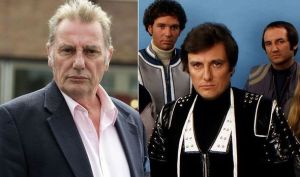
 Actor Paul Darrow passed away this week after a brief illness, and the world is the lesser for it. You can check out any number of memorials, especially about his work on Blake’s 7, but for me, he had another honor. He is, as far as I know, one of two actors cast by my favorite author, Tanith Lee, in a novel. You can check this entry on Kill the Dead here but anyone who reads the book will easily hear Darrow’s voice in the main character.
And, sorry Tanith, I did hear Michael Keating in the other role, intentional or not.
This was, in some ways, Lee and Darrow’s third collaboration. The first was in the series 3 episode of Blake’s 7, “Sarcophagus.” You can find some lovely reviews of it out there (including its own TV Tropes page) but I adore it as a near perfect “bottle” episode.
If you’re unfamiliar with a term, a “bottle” episode comes from ‘ship in a bottle.’ It’s a budget saving episode, designed to take place in pre-constructed sets with minimal guest actors and other items which could bloat the budget. They show up on Science Fiction shows all the time because they save money and production time. At best, they’re used to give the actors a chance to interact, show their characters in a different light. At their worst, they’re an excuse to save money.
And then there is “Sarcophagus.” It starts with a shadow play which, frankly, gives you the whole episode. But from there, it extends to all of the characters, enveloping them in what could have been another ‘alien on the loose’ show. But, instead, it highlights every character and gives them a chance to shine. Michael Keating gets to show off his magic skills as well!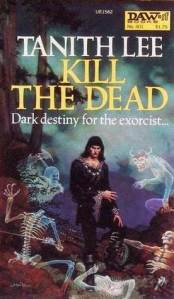
The dialog sparkles (even Tarrant gets in a good line or two!) but the show really belongs to Jan Chappel, playing two roles, and Paul Darrow as two people who are mourning losses in their own way. That undercurrent of loss, death, and mourning runs through the whole show, ending with a quiet moment showing both characters back in the saddle, ready to move forward.
I wish I could get my hands on the script. I wish I could ask Tanith Lee about the writing process, or talk to Paul Darrow about filming it. But, instead, I can look through the completed episode. I can see the way the characters take on the roles of the figures in the shadow play. I can watch how little character moments give our actors more meat to work with than two series worth of gadding about in a disused quarry.
We can look. We can mourn. And then we can move on, with memories of the events and all they’ve shown us, good or ill, in our hearts.
 Biomechanoid Blues