
First, hope everyone is well and safe. It’s getting rougher in my area. I can only imagine what other parts of the country are experiencing.
 This last stretch of The Horror Project has been all about reading. In specific, reading horror short stories and researching how to write horror, horror history, and other related topics. I haven’t made a video just yet, but that will be forthcoming (and discussed below). But I wanted to discuss what I’ve encountered so far during the “Study Horror” phase of the Project.
- There is a distinct lack of documentary/lecture material out there on writing horror.
- Books/essays on writing horror fall into two categories: Personal reminiscences or how-to write, market, etc. horror fiction.
- There needs to be more out there –
- – and there must be more than movie talk
Let me start with the first and last points –
I went through a long spree of YouTube and movie and documentary searches thinking there’d be a good amount of material about horror writers, horror short stories, etc. At least on the interview side. Not so much, though. I found far more personal essays and discussions of the nature of horror, what makes it scary, etc. (I’ve added to them with my last video). And what interviews I could find were often clip interviews or career retrospective lectures.
“Well, that’s just video. Most people are talking about horror films, not necessarily horror fiction. The internet essay world will be better.”
But, again, aside from specific interviews with authors – which tended to all be about the work the author was out promoting (usually on their own dime) – and occasional essays about ‘what is horror’ I found little more than I did on the documentary front. Unless, of course, it was about movies.
And I can completely understand – it’s easier to get an article on why the recently released blu-ray edition of The Slumber Party Massacre reveals it to be an underrated gem sold than dissection of what makes Clive Barker’s Book of Blood entry “Dread” such a potent short story. The essay market isn’t what it used to be. Also, much of this has been taken up by podcasts. The “This is Horror” team, for example, makes amazing podcasts interviewing authors and breaking down stories.
So, where did I go for resources? Books. So, here’s the syllabus I pulled together for my study:
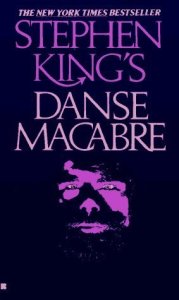
- Danse Macabre and On Writing by Stephen King
- On Writing Horror edited by Mort Castle
- Writing in the Dark by Tim Waggoner
- The Dream Weaver books from Crystal Lake Publishing
- Horror 101 (Book 1) from Crystal Lake Publishing
- To Each their Darkness by Gary A. Braunback
And this gave me a lot to dig into.
 First, though, I need to say outright there needs to be more good writing about horror that doesn’t focus on movies. All genre writing is tied to its mass media counterparts. It’s hard to talk about SF without Star Wars sneaking in. And you can’t talk about hard boiled mysteries without their representations on film showing up. Yet, if you peruse through YouTube, you will still find folks talking about mystery novels or written SF without reference to movies.
No so with horror. The movies lead, and the literature follows here. For all everyone discusses Victorian ghost stories, or Mary Shelly, if you look up anything on writing horror, it references a horror movie. Usually a slasher film because, until recently, the unholy trinity (Freddy, Jason, Michael Myers and all their misbegotten children) dominated the whole conversation.
This needs to change. Should we not reference films? No. I think Stephen King got the balance right in Danse Macabre. For everything he wrote about horror movies, and how they shaped them, he also broke down Peter Straub’s Ghost Story, and other books which lead to the (late 70’s, early 80’s) horror boom. He went back to Shelly and Stoker and Stephenson to discuss how they impacted everything afterwards. This back and forth – how the two media cross pollinated each other – created a personal journey into horror that still resonates decades after I first saw it in the Little Falls Library spinner rack.
Second, you can learn as much from personal journeys through horror as you can from the How To books. Stephen King’s On Writing is as much memoir as it is down-to-the-dirt travelogue through the process. I rank Tim Waggoner and Gary Braunback’s up there with King’s. They’re personal as much as professional.
And never skip past introductions, epigraphs, and other addenda to short story collections. Ramsey Campbell’s essays on horror (And he’s written many – go find them. Especially the essay about his father) teach you as much as the articles he contributed to the Crystal Lake books breaking down how he created, edited, and polished various short stories. Every story has a backstory. To a writer, the backstory is as invaluable as the one on the printed page.
Finally, find what sticks to you and works for you (but don’t let that be an excuse not to try). The Horror Writer’s Association’s On Writing Horror is a cornerstone, and I remember reading the original edition in college, but the folks at Crystal Lake Publishing have taken up the cause of chronicling the practice of writing horror and surpassed it. Their books are filled with practical advice, story breakdowns, and interviews.
I spent hours taking down notes from the essays. They gave me new things to think about – new things to try. It gave me a huge jump on the Brainstorming section of the project. But it also led me to think about other sources for story building, and how much of the advice tied together with other lessons on writing.
Am I going to take all of it? No. But, it does help me get a better focus on what I want to write. It also gives me more options for writing. It also energized me. These books give me much the same buzz as talking to others about writing. There is a community here – sharing knowledge. Paying forward what was learned to those still learning. Now, it’s up to me. I need to take this and go forth into writing.
With one stop. Ramsey Campbell showed the way. I need to find a story that disturbs me. Scares me. And then I need to vivisect it.
 Biomechanoid Blues