
Film Noir.
Nordic Noir.
Hard boiled versus Noir writing.
Anytime you write about the arts, you end up in a circular march about themes and ideas and genre. It’s great copy for blogs like mine. It’s the kind of thing I love debating about in convention panels. It can also get caught around your throat like a plastic six-pack holder choking a sea lion to death. Mostly because everyone hears noir and thinks:

This is what I saw when I searched ‘noir’ in WordPress’ stock photo searches. Noir is tide and time locked thanks to the pulp writers of the 30s and the film-makers of the 40s who adapted their works. It became all about men in fedoras (which was the standard hat everyone wore because you wore hats those days) and dangerous dames in silken gowns (because the production code wouldn’t let them show more) and rain soaked streets like in Detour or The Hitch-Hiker—
Wait. Sorry. Those films (along with a bunch of others) took place in the deserts and mountains out west. I mean, they didn’t call the film High Sierra because it was a street name. But that’s my point. Noir is more than a look or a setting. Want proof? How about this?
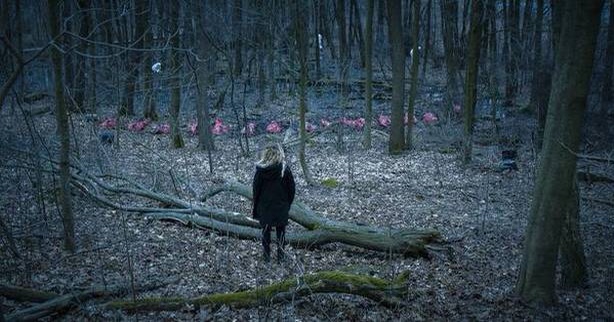
This is a shot from Deadwind – aka Karrpi – a ‘nordic noir’ TV series. No fedoras. No dames in silken gowns. Lot of sweaters. Lot of winter coats. The streets are less rain soaked than covered in snow and slush. And the landscape is beautiful and daunting all at once. If you showed the two shots side by side and said, “Which one is noir?” how many people do you think would answer, “Both?”
If you can’t define noir by an aesthetic, then what do you use? For this, we go back to the literature classes some of us skipped in school. We look at theme.
The Good Life… and How to Get It
“One last score.”
”I’ll finally get what I want.”
“I’d have her all to myself, at last!”
”We’ll be rich. Rich and free!”
If there is one theme I’e seen running through noir of every stripe, it’s a struggle for the good life. The classic era and the pulps that proceeded it reacted to a fundamental attack on the “American Dream” – the idea that if you worked hard, you’d succeed and rise to the top. The Depression punched holes in that dream. And the horrors of WWII deepened the holes. The Good Life wasn’t available to everyone. If you had it, you had power and could defend it. If you didn’t, you the folks who did would flaunt it over you and have you fighting your neighbors for a piece of the pie.
Later iterations would expand on this, and make it international. The bleakest noir I’ve ever seen was Black Gravel, a film about a truck driver skimming from the post-war reconstruction in Germany. His “Good Life” was being back with the only woman he really loved (now married to a GI) and living in this simple little cabin he’s built driving black market construction materials.
How does it end? Badly. Very badly.
There’s a reason why, aside from a few exceptions, the 50’s and the House UnAmerican Activities Committee killed the classic era of noir movies. Saying the Good Life was only for the powerful, the wealthy, and well connected – that radical change would be needed before everyone could get to it – stopped being a pithy observation and became dangerous. Very dangerous.
It’s a Filthy Little World
You know you’re taking a trip into #NoirAlley when corruption is the rule, not the exception. Only mugs believe the authorities are your friends, everyone is faithful and kind, and hard work will get you everywhere. The only faith rewarded in a Noir story is faith in the worst about folks.
Let’s take a normal situation and make it noir: You’re driving to work when a police car pulls up behind you. You weren’t doing anything. You car isn’t the best, but it’s up to date. You’ve got a few parking tickets outstanding, but it was a either that or get groceries for the kids. As the cop comes up, you see he’s got his hand on his gun. What’s going on? He thinks you’re a criminal. He’s coming to shoot you, no questions asked. You’ve got to run. It’s your only chance.
When he comes up to the side of your car and tells you to get out, and you ask what the problem is, he goes for the gun. You panic, duck, and push the door open. It hits him and he stumbles back into traffic…
It was an accident! A mistake! But who will they believe? You’ve got to get out…
It’s a filthy world. The cop isn’t there to help – he’s a threat. The news folks will find your one picture that makes you look like a criminal. The people who want your home so they can flip it and sell it – they’ll use this to put you and your kids on the street. Everyone wants something. Everyone’s got an angle. It’s a filthy little world.
Protagonist, Not Hero
This builds off of the “It’s a Filthy Little World” principle. Even the ‘good guys’ of a noir story are not so good, and not so perfect. Nordic Noir built itself on this idea. Karrpi, from Deadwind, is a mess of bad decisions, both personal and professional. She is no one’s knight in shining armor.
Anyone who plays at being a hero only does so because they can afford it. Their privileged- the system protects them, or they’ve got the Good Life already and can afford to go slumming. If they get a little dirty, it’s to defend their Good Life. They make The Hard Decisions (TM) to ensure the Wrong People (TM) don’t get past their white picket fence.
The dirt – corruption or imperfection – becomes like camouflage. Not enough, and the world knows you are an innocent ripe for the plucking. Too much, and you revel in it. You become Ralph Meeker’s Mike Hammer – nearly orgasmic as you’re backhanding guys for information. Just enough, and it becomes camouflage. You can move through, unnoticed, and get the job done.
Once Again, the Enemy is Capitalism
This is a running comment of mine on the #NoirAlley twitter feed, as we watch movies from the classic era. But it applies elsewhere. This is why the HUAC folks came down, hard, on many directors and writers from that time. After the depression and the war, everyone doubled down on “No, we’re FINE. There’s no Root Cause to problems. It’s just BAD PEOPLE born BAD. There’s NOTHING WRONG and if you say there, is you are a COMMUNIST.”
(We can talk about the irony of a landscape where the wealthy paid a top tax rate of 70% and most everyone thought jobs should be assured by the government – at least until this whole ‘civil rights’ thing happened)
But the doubling-down on wild west capitalism became a cornerstone of all Noir to follow. How many of these ‘criminal masterminds’ would be captains of industry if they were born in the right zip code? In Noir, there’s no difference between DJT and El Chapo – one just was born in the right spot to get society’s approval for their exploitation of the poor saps out in the world.
Maybe this is one of the things I like the most about Nordic Noir. Yes, there’s greed and capitalism there. But the crimes aren’t about getting health care for your sick family. (Karrpi gets 3 months of bereavement leave and her co-workers complain when she comes back early. 3 Months. In the US, you’d be back to work as soon as your spouse’s body is cold.) But folks still commit crimes to get the Good Life. To get the person they love. Or ensure their ugly corporate secrets don’t get out.
Small Victories
In the end, the victories are small ones. There’s no ‘restoration of order’ because the order is corrupt. Instead, there’s a few wins here and there: You find the person who killed your partner. You get revenge on the person who abused you. One corrupt rich guy doesn’t get to play Jack The Ripper for a bit. You help one person learn to survive in the harsh world.
In the end, it’s not about the venetian blinds or 40’s fashion. It’s about making it through the end of the day with most of your soul intact – and what you’ll do on your way there.
 Biomechanoid Blues