

You’ve probably heard this old phrase. “He’d sell his own mother for a dollar/drink/free meal.” It’s a character flaw – they’re either desperate or morally bankrupt. Often, they’re poor or have pretensions to social climbing. Think of the sleazy lawyer always on the make. Think of the partner who sold your counterfeiting plates for just another drink. Obviously if they were decent, hard-working, God-fearing people they wouldn’t be so grubby and venal. Right?
But what if they are decent, hard-working, God-fearing people? What if it’s “I turned in my undocumented neighbor for the bounty. I can’t afford eggs thanks to inflation. If it’s a choice between my family and a stranger, my family comes first.” That changes things, doesn’t it. They’re doing everything right and still struggling. It can’t be a character flaw. I mean, they had egg in their beer way back when. Don’t they deserve the good life? A little creature comfort? Some dignity? Haven’t they earned it?
Must be something else – someone else – keeping them from the American dream. Their neighbor is obviously the reason we don’t have it so good. Taking what they deserve.
But what if it’s not your neighbor? What if it was the rich guy who stiffs you for your charter fees? What if it was the grocery wholesaler, pushing you to sell your apples for as little as possible, so he can enjoy a 150% markup? Or the CFO who chooses stock buybacks to pump-up his bonuses and shareholder dividends instead of cost-of-living increases for employees?
Now we’re getting into noir territory.
One of the key reasons many noir films, filmmakers, and stars got the attention of the House Un-American Activities Committee is the simple fact it dared say “The playing field isn’t level. We’re told work hard and we get it all – yet the people telling us this are sitting pretty on money already. They don’t have to make the ugly choices we do. Is that fair?” This basic notion – that the American Dream is a myth, and the real people responsible for the price of eggs being so high aren’t the folks struggling beside you, but the people on top who want to get richer at any cost – is at the heart of many a noir story.

Two of my favorite unsung noir films tackle the myth head on. Thieves’ Highway (1949) focuses on Nico “Nick” Garcos (Richard Conte) who comes back from the war to discover his American Dream is on life support. The family business is gone – his immigrant father is crippled and the truck he used to collect and sell produce in San Francisco sold. The man responsible? A produce wholesaler – Mike Figlia (Played to the hilt by Lee J. Cobb. Nick goes into business with Ed, who bought the truck, to start hauling apples again – all the while Nick has an eye to getting back at Figlia for what happened to his dad. All this over the objection of his blonde sweetheart, Polly, who wants a house and a ring from him.
Nick gets to the market ahead of Ed (whose truck is older and slower) – to get a first-hand taste of Figlia’s business practices. Figlia hires a Rica, a refugee and streetwalker, to distract Nick while he unloads the fruit and begins selling it. When Nick buckles down and actually gets paid a fair amount, Figlia sends thugs to beat the cash out of him.
In short order, things break down: Polly finds him broke and commiserating with a foreign woman – ending the relationship. Ed, on the other hand, crashes his truck. His entire load is spilled out and he burns to death in the crash. Two other truckers see this and report it to the market. Figlia, not one to lose a chance at big money, convinces one to go back and pick up the load for an absolute bottom price. Fifty cents a crate – which Figlia can resell for at four times as much.
Everyone ends up in a roadside bar, where Nick and the other truckers confront Figlia. They discover how this ‘honest’ American capitalist has been robbing, cheating, and crippling the people who do the hard & dangerous work keeping him supplied. Alas, Hollywood forces us out of the happy ending we want (The police arrest Figlia instead of letting him get beaten down by the truckers) and replaces it with Nick and Rica getting together.

(I honestly don’t mind that bit. Rica is played by Valentina Cortese and she’s way better than the vapid, all-American sweetheart Polly. I can see two scarred survivors finding comfort with each other.)

But the message is clear – you enemy isn’t the growers (also immigrants!) or the truckers or the ones doing the actual work. It’s the ones who make their money by taking what you do, paying you bare minimum for it, inflating the prices and pocketing the rest – by any means necessary. Small wonder HUAC was unhappy and the director, Jules Dassin, ended up on the Blacklist.
And what about the “Egg in our beer” bit? Well, that comes from The Breaking Point (1950) – an adaptation of To Have and Have Not staring John Garfield, Patricia Neal and Juano Hernandez directed by Michael Curtiz (Casablanca, White Christmas). Garfield’s sport-fishing boat captain says it about the days when he was just getting out of the war, and the Navy. He had his vision of owning and operating a boat, had his wife and kids, and enough money for everything they needed. The phrase apparently is about having a good thing and demanding more, to the point where it’s too much.

And Garfield’s Harry Morgan wants egg back in his beer. His business is on the skids from rising costs and fewer charters (it’s implied he’s losing to better funded charters). He can’t give his kids the toys they want, or pay his friend Wesley (Hernandez) what he deserves. The glittering, fancy future he was promises is not materializing. And then a rich charter with a pretty lady (Neal) by his side ditches him in Mexico waters without paying – and ditches her, too, by the by. Quoth Bill Gates from The Simpsons, “You didn’t think I got this rich by writing checks, do you?”

He’s forced to take a shady charter ferrying illegal Chinese immigrants and nearly gets caught, but it’s the beginning of the end. Blackmailed by a sleazy lawyer, drawn to the high-life he sees other, less scrupulous people lead (like the man who suggests that, once he has his money, the Chinese immigrants don’t need to make it to shore) and ego bruised by watching his family struggle (to the point of suggesting working cabbage fields to make ends meet) he starts taking more risks.
And it ends badly. Really badly. I do not want to spoil this one – you need to see it for yourself. But it’s a damning film about how the conflict between the American dream (I’ll have my own boat, and make a good living!) versus the American reality (You need to have money to make money), Morgan’s pride, his refusal to see how badly the world is stacked against working class folks, and his dogged belief he can be one of the rich folks that can ditch charters without paying destroys him.
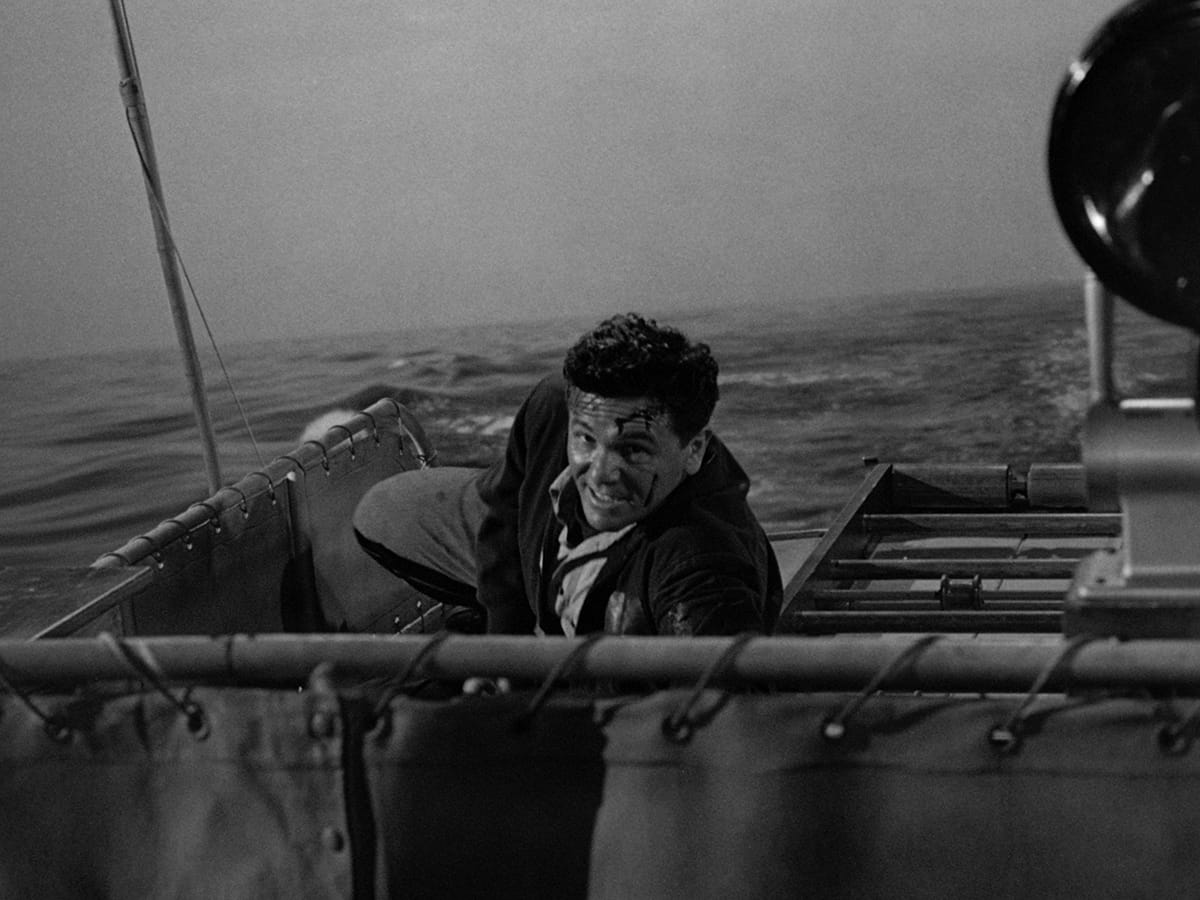
(Garfield, by the by, was another victim of HUAC – they literally hounded him into a heart attack.)
If there’s a lesson to be learned from all of these films it’s that the person in the truck next to you, or the boat beside you, isn’t the one wrecking your life. They may not have papers, or your color, but they are sharing the same struggles.
It’s the Figlia’s of the world, getting people to steal a dead man’s apples. It’s the moneybags who won’t pay and forced you to make bad choices to survive. Look at the folks who have egg in their beer all the time and wonder how they’re getting eggs so cheap – while you’re paying black market levels for a dozen.
I’ll leave you with a third noir entry from Bruce Springsteen:
 Biomechanoid Blues