I’ve been a Doctor Who fan since I was ten, when my friend Nick showed me the 20th anniversary magazine in 4th grade. I watched the local PBS showings (even answered phones once) and my friend Guus would have his relatives in Holland send PAL tapes of the new Colin Baker and Sylvester McCoy episodes. With the good Doctor heading into another set of wilderness years, I decided I’d go ahead and play fanboy – pretend I was writing a proposal for a new series.
Why?
To be honest, I needed a break from reality. Over the last two months I’ve been dealing with my father’s health issues, the death of my kum (aka Godfather in Serbian), and having to say goodbye to my cat Tellus after 15 years and battle with small cell lymphoma of the intestine. This little exercise may be just that – just a writing exercise – but it’s helping.

Doctor Who: Adventures in Time & Space
The basic premise of Doctor Who remains the same: The Doctor, and their companions, travel through the universe and history, encountering the wonderous and the terrifying. They discover evils, great and small, and fight them with compassion, understanding, and cleverness.
But how to re-introduce this to a new audience while still keeping the fans who have watched (and argued) about the Doctor’s adventures for decades? First the basics – an expansion from 10 episodes to 12, with a holiday special.
The rest? – We need to define core tenants for this journey with the Doctor and how it will bring a new light to their adventures.
Punch Up, Never Down
Here, I agree with award winning author Charlie Jane Anders – the Doctor should become anti-authoritarian once again. The Doctor is a scholar and scientist above all else, which means being open to learn but also questioning, testing, and proving. If someone says, “If it’s not broken, don’t fix it” the Doctor’s response should be, “Not broken for whom? For you? Or for everyone else?”
Does this mean the Doctor should be dour? No. Remember, they are driven by curiosity and wonder. They want to see and learn about everything. Their goal is to understand people on their own terms. At their core, they should hold the delight at everything the 13th Doctor had at meeting an alternate universe in the shape of a frog.
But they aren’t fools. They know that for every person who sees an old building and wants to fix it up for low-income housing, there are others who’d let it rot for personal gain, or to prove a point about ‘those people.’
And yes: this means no more Avengers-style UNIT headquarters with massive numbers of guns. If there are troops in the streets, something has gone horribly wrong. To quote the 5th Doctor played by Peter Davidson, “There should have been a better way.” The Doctor’s job is to help find that better way.
The Doctor will always help rather than hurt, advocate for understanding over fear, and demand those in charge prove they’re acting for all, not just for themselves. The Doctor builds bridges – and fights against those who’d turn those bridges into toll lanes. If faced with a gun, the Doctor responds with a screwdriver and dismantles the gun.
I’m also using ‘they’ very deliberately. Anyone and everyone can be the Doctor. I would encourage casting a woman, a person of color, or a trans actor in the role. The actor, consciously or not, guides the Doctor’s latest regeneration. Giving the TARDIS keys to someone with a very different background from previous Doctors will just help create stories we can’t imagine today.
Our guiding light should be this quote from the 12th Doctor, played by Peter Capalidi:
“I do what I do, because it’s right! Because it’s decent! And above all, it’s kind. It’s just that. Just kind.”
Personal Stories on a Grand Canvas
Take a look at Doctor Who Magazine’s top ten. All of them massive epics filled with special effects, yes?
No. They’re episodes with personal, character stakes.
The top episode, “Heaven Sent,” is just the Doctor in a castle chipping away at a mountain. Even the big Dalek episodes, “Genesis” and “Remembrance” – what do viewers take away? Not necessarily the explosions, but the smaller moments. The 4th Doctor asking if he has the right to eliminate the Daleks before they are ‘born.’ The 7th Doctor’s quiet conversation with a man in a tea shop, wondering about the consequences of drastic action against his old enemies.
Embedded in these episodes, big and small, are character moments and personal stories. This series of Doctor Who would keep a grand canvas, but it would be in the background, slightly out of focus, where the characters – the Doctor and their companions – and their story arcs would be front and center.
And, yes, there should be story arcs. The serial nature of Doctor Who, even in its modern incarnation, means we can have multiple stories running. We can have the big story in the background, yes, and the more immediate one. But the background story should not drown out the more direct and personal ones.
This does not mean Doctor Who would become a tiny chamber show with no exteriors or visual effects. Special effects need to be special. They must be deployed in support of the story and the character. “Spectacle for spectacle’s sake” should never be the motto of Doctor Who.
Character Before Continuity 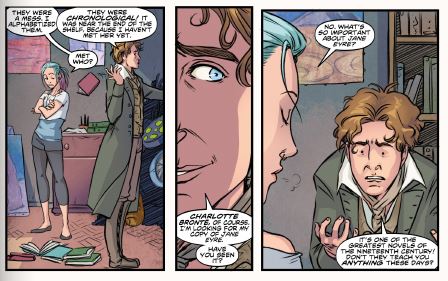
Doctor Who has an advantage other SF franchise cannot beat – reinvention is built into its blood. When the world gets too tied down by history or continuity, it can just fall back to its core concept and reset expectations. Are people tired of the ‘big, shiny, the universe is ending all the time’ stories? With a small break and a regeneration, Doctor Who can go cottage core – where the story of one person can become just as vital as that of an entire solar system.
Continuity and history should never become chains for the main show. Ancillary licenses such as novels, comics, and the audio drama range can fill in bits for those hungry for the ‘stories behind the stories.’ The series will be here to blaze a new trail. And if a reference is made to some past event, it should be written for new ears.
Not: “It was during the second rule of Rassilon the Immortal when the Time Lords, still reeling after barely surviving the Great Time Wars were laid low by the Master and his Genocide Wave, in an attempt to hide the root of Time Lord society was, in fact, the Timeless Child…”
Instead: “My kind? They had a grand empire that lasted billions of years. An empire built on stolen secrets and deep lies. They fought devastating wars and committed terrible acts in the name of that empire. And then? Then they were slaughtered by one of their own. A monster they made. That makes me just another refugee. A survivor of genocide, trying to help others.”
And in this series, the companions should take a bit more focus. The Doctor is best when they have good people to bounce against and hold them to account. We will talk more about specific companions below, but we should not be afraid to have people who don’t need to head back home to visit their grandmother every third episode…
New Enemies for Our Times – Old Enemies for Special Occasions
Old foes returning like clockwork just to put “of the Daleks” on the title of an episode only burns out audiences. Overusing the big monsters becomes just like eating your favorite meal every day, day after day, until the sight of it makes you queasy.
We must encourage new writers to come up with new challenges for The Doctor. Even if not all of them become easily marketable, it breathes life into the series. It also gives us a chance to reflect our current world and concerns through the lens of Doctor Who. This first series should not use any of the classic monsters which appeared in the most recent series of Doctor Who. The bar for bringing back an ‘old favorite’ should be at an elite level. A ‘workaday Ice Warrior’ story won’t cut it.
This series will have an ongoing villain, but they will be an ‘agent’ and represent a larger threat hiding in the background. This will allow ‘blink and you missed it’ cameos and hints throughout the series. The goal is to have the audience look back and realize they’ve seen the threat all along.
Global Storytelling from Global Storytellers
Doctor Who belongs to the world now. Which means we have a rare chance to bring in an amazing pool of talent from across the globe and across genres. Many amazing authors are also scriptwriters and can help bring new perspective to the series.
Imagine a Doctor Who episode written by Nnedi Okorofor, or Gulliermo Del Toro? It may be a high bar to clear, but we need to invite perspectives as diverse and creative as the universe the Doctor loves.
After the last sixty years, we now have a chance to pull the absolute best talent into Doctor Who. The goal in this first revival year is to have at least one script – possibly more – written by a non-UK based writer.
The Start of the Journey – Our Companions
The original Doctor Who didn’t begin with the Doctor but with two schoolteachers – Ian and Barbara. Modern Doctor Who began with Rose. This version will continue the tradition – beginning with our companions.
Sophia is a young woman in her thirties working at a non-governmental organization helping genocide survivors and climate refugees. In addition to finding new homes for people who’ve been through Hell on earth, she also advocates on their behalf. Her personal experience comes in – her family barely escaped the Balkans after the fall of the Eastern Bloc. Kindness from an NGO worker helped them settle in the UK and she wanted to pay it forward.
And that’s proving hard. When we meet Sophia, she is on the verge of quitting. Exhausted and burned out, she is still literally bearing the scars of her work. She tells a co-worker at their favorite tea stand – run out of an old Police Box – she feels like she isn’t changing anything. Her day should prove that: Abusive phone calls, shuttered government services, and local politicians who care more about optics than the people in their constituencies.
As we’ll learn through the series, she was in the center of a riot started by an internet rumor an immigrant killed a small child. Untrue, but people were waiting with petrol bombs and surprisingly sophisticated 3D printed weapons. She watched as petrol bombs were thrown into the flats of an immigrant families she was visiting. When people ran out of the burning building, they were shot down. Sophia was only spared because she was buried under rubble and left for dead. There, she thought she saw a man in a very expensive suit casually talking on a headset as if this was completely normal.
But normal is about to go out the window when she’s having a late-night cup of tea at the still-open stand. A lion-faced woman appears out of nowhere, accompanied by a strange gust of wind. The woman has a manacle on one wrist, wounds across her back and legs, and is asking for the Doctor.
The lion-faced woman is Lunda – a Tharil. This is a race from the old series, created by author Stephen Gallagher. It will be a callback, but all the audience needs to know is she is a time-sensitive being able to walk through the Vortex. If the TARDIS is a camper van, Lunda is a backpacker. Through the series we’ll learn that her people, clever as cats, hid away in pocket universes during the Time Wars. After the Genocide wave hit, they came out of seclusion to help the survivors.
Yes. Survivors.
Because when she was captured by beings looking to harness time sensitivity and temporal technology, Lunda was on her way to deliver a message to the Doctor. “There are other travelers on your road – and they need your help.”
Lunda will be a slightly surreal and alien counterpoint to the very grounded Sophia, while allowing for a few cat and Cats jokes along the way. She also represents a very distinct lifeline to the Doctor – offering a hope of community and family when all seemed lost. Finding this community will help Sophia rediscover why the work she does is important. It will help Lunda find purpose beyond revenge.
Revenge against whom? The Consultant.
And what about the Doctor and the TARDIS? In this most recent incarnation, they’ve decided to slow things down a bit and touch grass. Work on smaller things. After reading a book about a tea-making monk and their robot friend, the Doctor decided to set up shop as the local tea monger, turning the front part of the TARDIS into a mini tea stand and setting up right outside a building housing NGO’s, health providers, and counselors.
Admittedly, they do pop off to retrieve teas from other times/places/planets, but they always come back in time to lend a helpful ear. Or hand, as they’ve also acted as a protest EMT, helping anyone injured while protesting. They were first on site to help get Sophia clear during the bombings. And the unusually advanced 3-D printed weapons didn’t go unnoticed.
The TARDIS has also undergone a bit of a change. It’s now in a more ‘elegant cottagecore’ mood than a massive gleaming white interior. Think of everyone’s favorite used bookstore/cafe with comfy furniture, wood paneling (and the round things!) and other cozy accents. The TARDIS console should still have screens and the like but imagine all that technology has been given a hand-crafted trim – as if someone spent a few years getting all their crafting ideas out in one go.
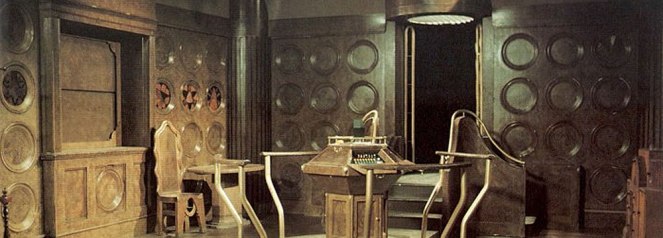
Of course, once past the console room doors into the TARDIS proper, the place we can add anything we like. Doors will open to gardens, strange rooms filled with thrumming crystals, a lab with a watermelon in a pressure clamp attached to strange machinery, etc. There should be more playfulness in the TARDIS this time – a little whimsey and weirdness.
It’ll be needed against the Consultant.
The Face of the Enemy
The Consultant is the latest in a long line of Doctor Who villains with definitive articles. At first, it looks like he doesn’t want to conquer the world – just ensure his clients are well served while raking in the billable hours. And right now, his clients want time sensitive beings and advanced temporal technologies.
There’s a ‘time bubble’ a brewing in the 34th Century, with two major venture capital companies collecting every way they can to chart possible futures and nudge them in profitable ways. The Collector’s firm (simply called the Firm) exists to provide strategic consulting and independent executive action to companies who don’t want to risk their EBITDA with direct intervention through wasteful expenditures such as on-book employees.
Of course, the Firm is selling to both sides and actively encouraging this realty-scourging level of competition. If this is a low scale time war, the Firm is acting as an arms broker. They keep some of the things they find for themselves – they’d be terrible consultants if they weren’t experts in all the latest predictive market analytics technology aka plugging a Time Sensitive into your financial prediction engines – but otherwise the goal is to keep the Holy Shareholders happy with ongoing profits.
And the current market hotness? Travelers and their TARDISes.
Dissidents, Travelers, and Survivors:
What the Doctor learns through Lunda is that not all Gallifreyans were killed by the Master in the Genocide wave.
After the last Time War, dissidents appeared – younger Time Lords who wanted more than a cloistered life trying to preserve a corrupt empire. Meanwhile, all the Gallifreyans who weren’t Time Lords – who existed in the parts of the world we didn’t see – just wanted quiet lives. They did not want to exist as supply stock for the Time Lords or their armies.
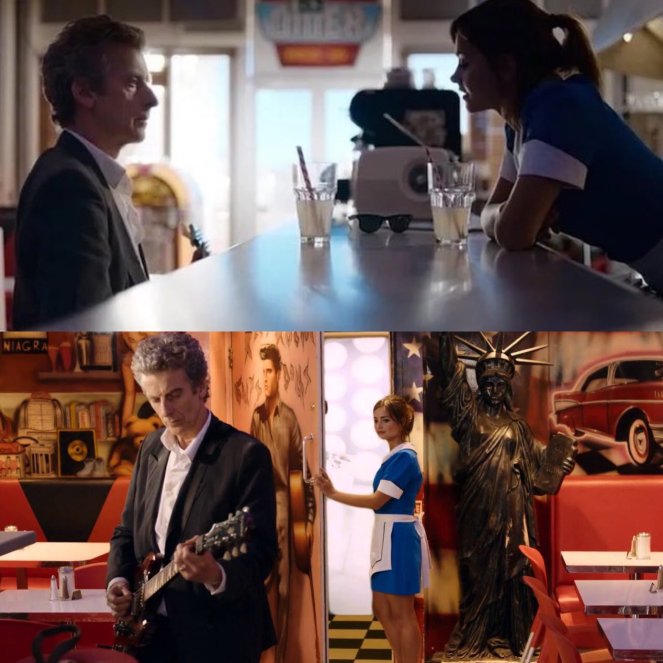
And so, an exodus began. With the help of the Tarils and others (we can drop hints about Clara and Me in their diner), TARDISes were stolen. Communities transported to quiet parts of the universe. And as a final act, the link that designated people as Time Lords was broken. They became Travelers, following the example of the person who won the time war – exploring, understanding, and helping where they could.
When the Genocide wave hit, they were spared. The Master, in his arrogance, slaughtered everyone who remained a Time Lord and kept the unique traits he exploited. He couldn’t imagine anyone but him and The Doctor would willingly leave…
Now, these Travelers and their companions are refugees – and a resource to be exploited by the Consultant and his Shareholder clients.
And so, The Doctor, Sophia, and Lunda begin their journey, helping Travelers and time-sensitives, undoing the damage done by the Time Lord empire, and building a community of idiots in boxes doing what they do because it’s right. And it’s kind.